
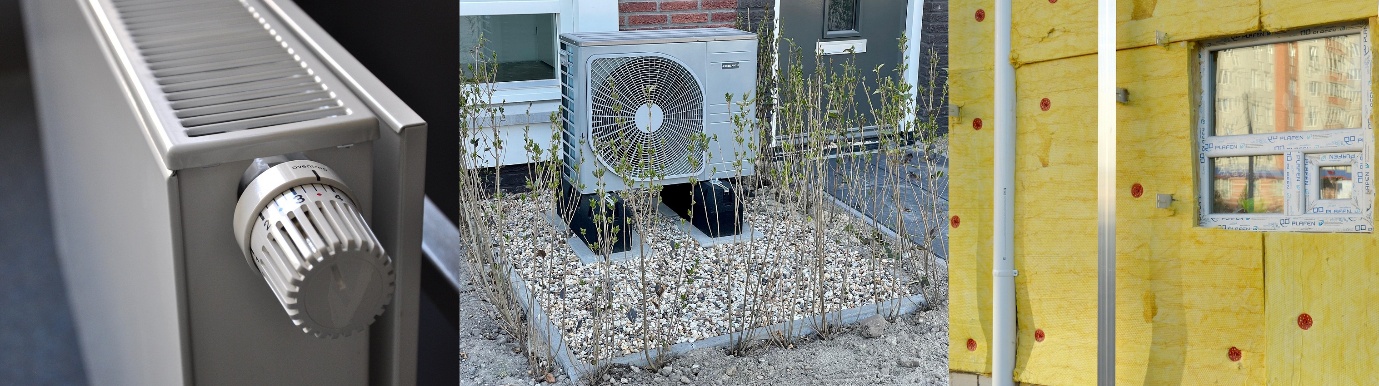
The use of heat pumps is set to become the default heating solution for new build residential buildings, driven initially by the 2021 changes to Part L of the Building Regulations, and likely to be further prioritized by the Future Homes Standard, the move away from gas fired systems and the lowering of the carbon factor for electricity allowing for reduced carbon emissions. In new, highly insulated homes, they can offer a cost-effective strategy for meeting zero carbon goals, but what about the estimated 25 million existing housing stock in England, how practical is it to replace gas-fired boilers with heat pumps in these properties.
The first hurdle to utilizing heat pumps in an existing home is that to maximize efficiency, heat pumps need to operate at lower water temperatures, around 45-55°C, compared with traditional boilers that would supply water to your radiators at between 60-70°C. If you lower the supply temperature of the water serving an existing radiator, the output will reduce, this means that either additional insulation should be applied to the room, reducing the amount of heat required, or the radiator will need to be replaced with a larger one, whose increased surface area will meet the rooms heating needs at the lower temperatures.
Heating distribution pipework in most homes is small in diameter, usually 15mm, or in some homes, even smaller, utilizing what is called “minibore” pipework. The reduced temperatures, and specifically difference between the supply water temperature and that returning back to the boiler, reduces its heat carry capacity, meaning that the existing pipework cannot carry as much heat. This could mean that in addition to new radiators, all the distribution pipework, usually running with floor and ceiling voids, may also need to be replaced.
Because of the reduced temperatures, hot water cannot be generated instantaneously, such as what occurs in a gas-fired combi-boiler. In such systems no hot water cylinder required with the hot water being delivered direct from the boiler. Therefore, if replacing a combi-boiler with a heat pump, space will also be required to locate a hot water cylinder.
Heat pumps have two main elements, the internal unit and an external unit, which is what extracts the heat from the air. Although modern external units are compact, they will still need space around them for free air flow and to allow maintenance access. Consideration will also need to be given to potential noise from the unit, particularly where this may cause a nuisance to neighbours.
Running costs should be carefully considered, particularly if switching from a gas-fired heating system to a heat pump. The fact is, in the UK, the cost of electricity per kWh is considerably higher than that of gas, therefore systems with a high Coefficient Of Performance (COP: the measure of a heat pump’s efficiency of generating heat) are needed in order to align running costs. However, switching from other more expensive fuels, such as LPG, will likely see running cost savings.
Finally, being fuelled by electricity, the capacity of the existing building supply will need to be checked to ensure that there is capacity in the system for the extra electrical load.
Heat pumps are an effective way to reduce your carbon footprint, however, there are many challenges with retrofitting within existing homes, which will likely result in only really being feasible where other major renovation works are being undertaken, due to the extent of changes potentially required to the buildings insulation levels, radiators and pipework distribution system.
Should you wish to talk to us further about the suitability of using heat pumps in your homes, please do get in touch by calling us on 01865 378885 or through the Contact Us form.