Residential - ERS - Residential & Commercial Energy Assessments & Building Compliance

Residential - ERS - Residential & Commercial Energy Assessments & Building Compliance
Infiltration and air leakage is the uncontrolled movement of air through a building envelope or component due to the porosity of building fabric materials, interfaces between materials and components, and deficiencies in the construction of the building, such as unsealed gaps and cracks.
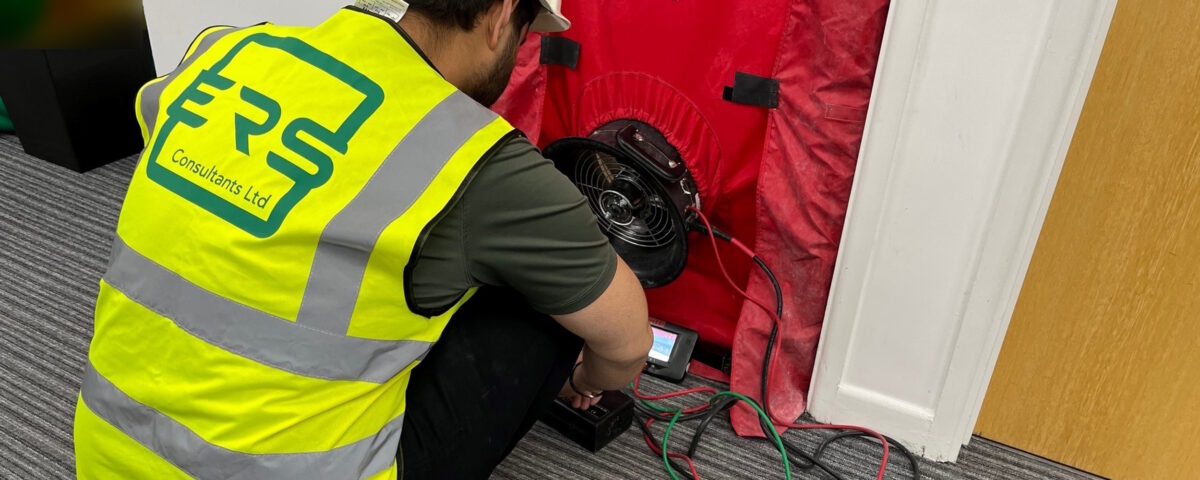
Air Tightness Testing is a method for measuring the amount of internal (conditioned) air that is unintentionally lost from the inside of a building as a result of this uncontrolled air movement. In candid terms, the procedure can be viewed as a way of measuring how ‘draughty’ a property is.
Referred to as Air Pressure Testing or Air Leakage Testing, each test is completed in strict accordance with a standardized methodology detailed within a Technical Guideline known as CIBSE TM23 ‘Testing Buildings for Air Leakage 2022’ by an accredited Air Tightness Contractor, and is a requirement of the Building Regulations Part L and F.
Excessive air leakage leads to increased energy demand to condition the building, and therefore increases the CO2 emissions associated, in addition to potentially causing discomfort to those using the space. In addition, air tightness testing is important to:
The ERS Consultants team is fully qualified in air tightness testing and is also affiliated with EAS, Elmhurst Airtightness Scheme. With our experience, we can advise you on air tightness and building design before the build, as well as during the build itself. If you would like to know more, call us on 01865 378885 or Contact Us on the contact form.